




2026 Updated US AMS Filing Requirements | Mihan Logistics Ensures Your Customs Compliance
As the U.S. Customs and Border Protection (CBP) continues to tighten regulatory requirements for import security and supply chain transparency, the Automated Manifest System (AMS) has become an increasingly vital component in customs clearance. For 2026, CBP has further raised its regulatory standards regarding the accuracy, timeliness and consistency of AMS submissions. For exporters shipping from China to the United States, strict compliance with AMS regulations is a fundamental prerequisite to avoid customs inspections and official penalties.
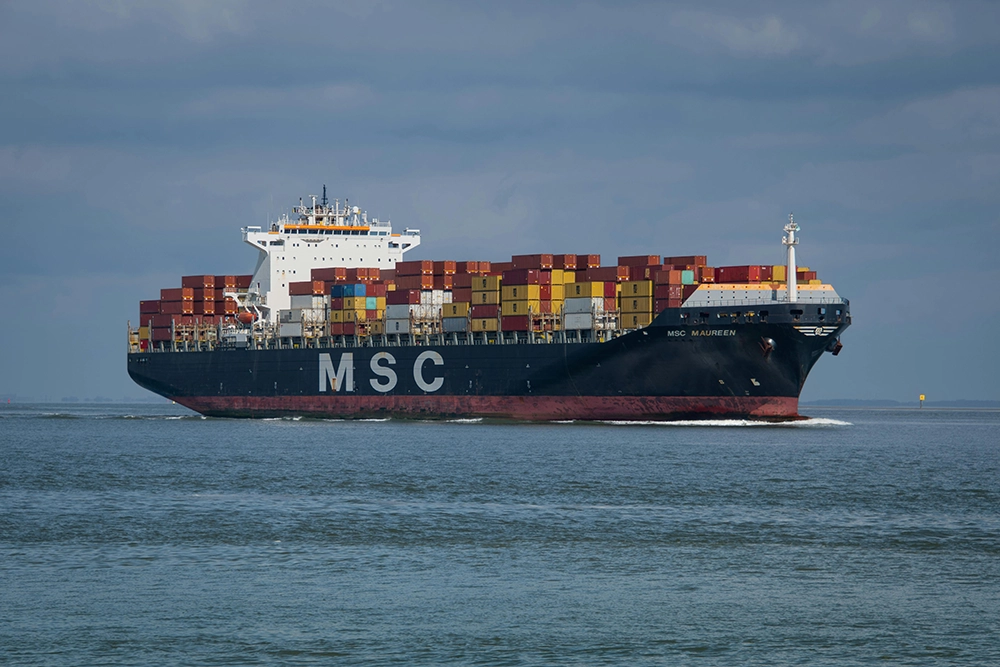

Within the U.S. import clearance framework, AMS is highly interconnected with the Importer Security Filing (ISF, namely the 10+2 rule), manifest record-filing and security screening procedures, jointly forming the core pre-arrival risk control mechanism.
Key 2026 Updates to AMS Filing Requirements
Based on recent enforcement practices, revised AMS requirements in 2026 focus on stricter regulatory enforcement rather than major overhauls of existing rules:
Stricter data consistency compliance
Commodity descriptions, HS codes, quantity, gross weight, as well as shipper, consignee and notify party information declared in AMS must be fully consistent with the bill of lading, commercial invoice and packing list.
Zero tolerance for vague commodity descriptions
Generic descriptions such as “general cargo”, “accessories” and “parts” will readily trigger system alerts. CBP mandates specific, identifiable declarations covering product features and application purposes.
Heightened penalties for late and erroneous filings
CBP will impose statutory fines rigorously on overdue or incomplete AMS submissions, which may also lead to port congestion and substantial surcharges from additional inspections.
Mandatory Information for AMS Filing
A complete AMS declaration covers the following core data entries:
- Full name, address and contact details of shipper and consignee
- Accurate English commodity description (including material, function and application)
- HS code (minimum 6-digit code recommended)
- Package quantity, gross weight and packaging method (e.g. carton, pallet)
- Port of loading and port of discharge
- Master B/L or house B/L number, together with transportation mode
Among all declared items, commodity description and HS code are the most error-prone entries, and also primary focuses of CBP risk assessment.
Critical AMS Compliance Risks for China-US Shipments
China remains one of the largest import sources for the United States, and cargo originating from China is subject to intensified AMS reviews. Common compliance risks include:
- Oversimplified product descriptions that hinder commodity classification verification
- Mismatch between declared value and actual product attributes
- Inconsistent declaration records across consecutive shipments from the same shipper
For cross-border e-commerce freight, FBA first-mile shipping and DDP delivery services, AMS filing is generally handled by freight forwarders, while cargo owners bear ultimate liability for the accuracy of original declaration data.
AMS Filing Deadlines
- Ocean freight: AMS data must be submitted at least 24 hours prior to cargo loading at the overseas port of loading. Failure to meet this deadline will result in loading denial or clearance delays at the destination port.
- Air freight: Filing requirements are subject to stricter time limits, with exact deadlines varying per flight schedule. Professional forwarders pre-secure valid filing windows in accordance with airline regulations.
Correlation Between AMS and ISF (10+2 Rule)
The AMS (Automated Manifest System) is filed by carriers or authorized freight forwarders, focusing on manifest data submission.
The ISF (Importer Security Filing, or 10+2 Declaration) is filed by importers or their designated agents, containing comprehensive commercial and supply chain details.
The two systems are mutually dependent: errors in AMS data will directly cause discrepancies in ISF declarations, creating dual compliance risks for shipments.
Consequences of Erroneous AMS Filings
Under the 2026 tightened regulatory regime, non-compliant AMS filings may result in the following outcomes:
- Cargo high-risk flagging and mandatory customs inspection
- Cargo detention at ports or supervised warehouses, incurring heavy demurrage and detention charges
- Administrative fines imposed by CBP, charged per shipment or per violation item
- Impaired long-term importer compliance record and elevated subsequent inspection frequency
Why Entrust Professional Forwarders with AMS Filing?
AMS filing seems to be simple data input, yet it involves cross-verification of CBP risk assessment algorithms, international trade compliance rules and transportation scheduling. Inexperienced operations are highly likely to trigger a chain of compliance issues.
Mihan Logistics is a professional international logistics provider specialized in China-US trade routes, with extensive practical experience in ocean freight, air freight and cross-border e-commerce logistics. We conduct proactive verification of AMS information throughout booking and document preparation processes, helping clients mitigate customs clearance risks from the source. By continuously tracking China-US shipping routes, mainstream commodity categories and latest CBP enforcement policies, we not only optimize overall logistics costs for clients but also enhance controllability of end-to-end transportation and customs clearance.
Enjoy smoother, fully compliant exports to the United States – Mihan Logistics, your reliable global logistics partner.
This article is compiled and published by Mihan Logistics. Please cite the source for any reproduction.