



Export
Frequently Asked Questions
Everything you need to know about our logistics services, shipping process, and cross-border solutions. Can't find your answer? Contact us directly.
Documentation: Ensure the information (product description, material, quantity, and value) on the commercial invoice and packing list is accurate and consistent, and complies with the customs requirements of the destination country. Packaging and Labeling: Use sturdy packaging suitable for long-distance transport. The outer cartons must clearly display the master waybill label, consignee information label, and any necessary special markings (e.g., Fragile, This Side Up). Information Matching: The booking information provided to the logistics provider (piece count, weight, dimensions, product description, shipper/consignee details) must be fully consistent with the actual cargo to avoid discrepancies during warehouse check-in. Compliance Self-Assessment: Verify that the goods are not prohibited or restricted for import in the destination country and confirm whether any relevant certifications (e.g., CE, FDA) are required.
Core clauses should include: Scope of Services and Pricing: Clearly define the mode of transport, route, transit time commitment, and the total door-to-door cost structure, listing all potential surcharges. Liability and Compensation: Specify the carrier's period of liability, compensation standards for cargo damage and shortage (e.g., based on weight or declared value), and the time limit for filing claims. Force Majeure and Exemptions: Clarify how delays or losses caused by force majeure events (e.g., pandemic, war, strikes) will be handled. Insurance: Specify whether insurance is included; if not, clearly define which party is responsible for purchasing it and who the insurance beneficiary is.
Conduct a "total cost" comparison: Base Freight Rate: Compare the unit rates for different transport modes (ocean/air/express). Billing Rules: Confirm whether the chargeable weight is based on actual weight or dimensional weight, and understand the volumetric conversion factor (typically 1:6000 for air freight, 1:5000 for express). Surcharge List: Request a complete list of additional charges, including customs declaration fees, documentation fees, origin/destination handling charges (THC/ORC), and fuel surcharges. Incoterms Differences: Verify the Incoterms associated with the quotation (e.g., EXW, FOB, CIF, DDP), as the rights, obligations, and costs of the buyer and seller vary under different terms.
Before shipping, you typically need a commercial invoice, packing list, and sometimes a certificate of origin. Our team will guide you through all required documentation to ensure compliance with international regulations and smooth customs clearance. We also assist in preparing any additional paperwork that may be required for specific destinations, such as import permits or inspection certificates. By carefully reviewing each document before dispatch, we help minimize delays, avoid unexpected fees, and ensure your shipment reaches its destination efficiently and without complications.
There are typically two legal methods: Agency Export: Entrust a customs broker or freight forwarder with import and export qualifications to act as the exporter of record, while you act as the shipper. This method allows you to retain the right to claim export tax rebates, provided that the rights and obligations are clearly defined with the agency. "Baidan" Export: Purchase customs declaration documents matching the cargo from qualified enterprises for declaration. This approach is simpler, but you will not be able to obtain the tax rebate copy of the customs declaration form, making it unsuitable for businesses that need such rebates.
The consequences can be severe and may include: Customs Clearance Delays: Customs may require reclassification, supplementary submission of documents, or physical inspection. Fines and Supplementary Tax Payment: Fines may be imposed for inaccurate classification, along with supplementary duty payments or refunds of duty differences. Legal Risks: If the goods are subject to export controls, licensing requirements, or high tax rebate rates, you may face administrative penalties or even criminal risks. Recommendation: For complex products, engage a professional customs broker or apply to customs for advance classification.
General Trade (0110): A traditional B2B model declared on a batch basis, applicable to enterprises with import/export rights and eligible for export tax rebates. It is suitable for bulk cargo transported by containerized ocean freight or air freight. Cross-Border E-Commerce Customs Clearance: A model specifically designed for B2C or small-batch B2B shipments. Examples include "9610" (direct mail small parcels), "9710" (cross-border e-commerce B2B direct export), and "9810" (cross-border e-commerce export to overseas warehouses). These models are better suited for fragmented e-commerce orders, have high requirements for data-driven management, and some may also qualify for tax rebates.
Before shipping, you typically need a commercial invoice, packing list, and sometimes a certificate of origin. Our team will guide you through all required documentation to ensure compliance with international regulations and smooth customs clearance. We also assist in preparing any additional paperwork that may be required for specific destinations, such as import permits or inspection certificates. By carefully reviewing each document before dispatch, we help minimize delays, avoid unexpected fees, and ensure your shipment reaches its destination efficiently and without complications.
International Express (DHL/UPS/FedEx/TNT): The fastest, with door-to-door delivery in approximately 3-7 days. The highest cost, suitable for high-value, small-sized, and urgent cargo. Air Freight: Relatively fast, with airport-to-airport delivery in approximately 5-10 days, plus trucking on both ends. Mid-range cost, suitable for medium cargo volumes with time-sensitive requirements. Ocean Freight: The slowest, with port-to-port delivery ranging from 15 to 40 days, and longer door-to-door transit times. The lowest cost, suitable for bulk and heavy cargo with low time sensitivity. Rail Freight (e.g., China-Europe Railway Express): Transit time falls between air and ocean freight, with a total transit time of approximately 18-25 days. It offers high cost-effectiveness and good stability, suitable for transportation between inland countries.
Ocean Freight: Use the Bill of Lading (B/L) number to check vessel status on the shipping line's official website. After the cargo arrives at the port, inquire about customs clearance and cargo pickup status through the freight forwarder or destination agent. Air Freight: Use the Master Air Waybill (MAWB) number to track on the airline's official website. The House Air Waybill (HAWB) number is used to check consolidated information in the freight forwarder's system. Express/Dedicated Line: Use the tracking number provided by the logistics provider to check the full tracking history (including customs clearance in progress, delivery, etc.) on its official website or platform.
Common causes include: Vessel/Flight Delays: Carriers adjust schedules due to weather, mechanical failures, or port congestion. Transshipment Congestion: Cargo is held at hub ports or airports due to insufficient operational capacity. Peak Season Backlogs: Tight shipping space during holidays or peak shopping seasons causes cargo to queue for transport. Force Majeure: Natural disasters, strikes, wars, and other such events. Recommendation: Select a carrier with stable services, purchase logistics delay insurance, and reserve buffer time in production planning.
Before shipping, you typically need a commercial invoice, packing list, and sometimes a certificate of origin. Our team will guide you through all required documentation to ensure compliance with international regulations and smooth customs clearance. We also assist in preparing any additional paperwork that may be required for specific destinations, such as import permits or inspection certificates. By carefully reviewing each document before dispatch, we help minimize delays, avoid unexpected fees, and ensure your shipment reaches its destination efficiently and without complications.
The basic steps include: Document Review: Customs checks and verifies documents such as the bill of lading, commercial invoice, and packing list. Cargo Declaration: Declare information such as the HS Code, value, and country of origin. Duty and Tax Calculation & Payment: Calculate and collect customs duties, VAT, and other taxes based on the declared value and applicable rates. Inspection (if selected): Customs will conduct an unpacking inspection of the cargo to verify whether the declared information matches the actual cargo. Release: After completing the above steps without any issues, customs issues a release instruction.
DDP with Duty and Tax Paid by Forwarder: The logistics provider acts as the importer of record and handles customs clearance and duty/tax payment on a consolidated basis. Advantages: Time-saving and worry-free, with fixed costs. Disadvantages: Typically cannot provide formal tax certificates (e.g., C88/I-104), which is not conducive to corporate tax compliance and VAT reclaim; title to the goods may be transferred to the logistics provider during clearance. Self-Filing Customs Clearance (using your own tax ID for DDU/DDP): Customs clearance is conducted under your own tax ID or that of your overseas entity. Advantages: Tax compliant, and you can obtain legal tax documents for VAT offset. Disadvantages: You need to handle customs clearance yourself or engage an agent, which requires certain capabilities from the shipper. Recommendation: For formal trade, high-value shipments, or B2B transactions requiring VAT offset, "self-filing customs clearance" is recommended. For e-commerce small parcels and low-value samples, "DDP with duty and tax paid by forwarder" may be considered.
Documentation Issues: Abnormal invoice values, unclear product descriptions, or missing required certificates (e.g., Certificate of Origin, test reports). Undervaluation: The declared value is significantly lower than the reasonable market range, triggering customs valuation and penalties. Sensitive Goods: Products subject to anti-dumping measures (e.g., steel, ceramic tiles), intellectual property infringement (counterfeit goods), or strictly regulated categories such as food and pharmaceuticals. Random Inspections: Random selections by customs based on its risk management system, which is a normal procedure.
Before shipping, you typically need a commercial invoice, packing list, and sometimes a certificate of origin. Our team will guide you through all required documentation to ensure compliance with international regulations and smooth customs clearance. We also assist in preparing any additional paperwork that may be required for specific destinations, such as import permits or inspection certificates. By carefully reviewing each document before dispatch, we help minimize delays, avoid unexpected fees, and ensure your shipment reaches its destination efficiently and without complications.
Verify Delivery Information: Immediately request the Proof of Delivery (POD) from the carrier and check the consignee's name, signature, time, and delivery location (e.g., whether the cargo was left at the front desk, warehouse, or with a neighbor). Initiate an Investigation: Formally submit a trace request for "cargo loss" to the carrier using the POD. The carrier will conduct an internal investigation following a defined process and timeline. Insurance Claim: If you have purchased cargo insurance, notify the insurance company at the same time and prepare the relevant documents to initiate a claim.
File an Objection on the Spot: When the delivery driver is present, immediately note the damage or shortage on the delivery receipt and take photos and videos as evidence. If conditions permit, conduct a joint inspection. File a Timely Report: Submit a written irregularity report to the carrier's delivery outlet or customer service department within the timeframe specified by the carrier (usually 24 hours to 7 days after signing for the cargo) and obtain a case number. Formal Claim: Submit a claim letter, commercial invoice, packing list, evidence photos of damage/shortage, and the case number to the carrier or insurance company to file a formal claim in accordance with the contract terms.
Learn about Local Rules: Understand the free time periods for demurrage and detention at the destination port in advance to avoid high container detention fees and port storage charges. Select a Reliable Agent: Partner with a logistics provider that has its own team or stable cooperative agents at the destination to ensure smooth cargo pickup, unpacking, deconsolidation, and final delivery. Appointment Management: For cargo to be delivered to warehouses or retail stores, schedule delivery appointments in advance to avoid waiting fees caused by the inability to unload the truck upon arrival.
Before shipping, you typically need a commercial invoice, packing list, and sometimes a certificate of origin. Our team will guide you through all required documentation to ensure compliance with international regulations and smooth customs clearance. We also assist in preparing any additional paperwork that may be required for specific destinations, such as import permits or inspection certificates. By carefully reviewing each document before dispatch, we help minimize delays, avoid unexpected fees, and ensure your shipment reaches its destination efficiently and without complications.
It refers to a service where logistics providers use information technology to provide customers with real-time end-to-end status tracking and data dashboards for the entire process from order placement and transportation through customs clearance to final delivery. Value: It helps customers predict cargo arrival times, arrange sales or production plans in advance, quickly identify exceptions in the logistics chain, make data-driven logistics decisions, and improve supply chain resilience.
Warehousing & Fulfillment (B2C/B2B): Provide warehousing services in overseas or bonded warehouses, including order fulfillment, drop shipping, labeling, and repackaging. Compliance & Advisory: Provide consulting services on the latest customs clearance policies, product market access requirements, and VAT/GST matters of the destination country to reduce compliance risks. Supply Chain Finance: Collaborate with financial institutions to offer customers financing solutions such as fund advances, duty/tax payment advances, or freight payment deferrals based on the in-transit or warehousing status of the cargo. Returns Management: Provide reverse logistics solutions such as overseas return receipt, quality inspection, maintenance, refurbishment, return to origin, or local disposal.
Prevention First: Purchase sufficient cargo insurance, use sturdy and reliable packaging, and ensure all documents are accurate. Complete Evidence: Maintain a complete chain of evidence, including contracts, waybills, communication records, and photos/videos of the cargo. Follow Defined Procedures: Strictly adhere to the time limits and procedures specified in the contract and by the carrier when filing a claim. Professional Assistance: For major losses or complex disputes, seek assistance from legal advisors specializing in logistics or arbitration institutions.
Before shipping, you typically need a commercial invoice, packing list, and sometimes a certificate of origin. Our team will guide you through all required documentation to ensure compliance with international regulations and smooth customs clearance. We also assist in preparing any additional paperwork that may be required for specific destinations, such as import permits or inspection certificates. By carefully reviewing each document before dispatch, we help minimize delays, avoid unexpected fees, and ensure your shipment reaches its destination efficiently and without complications.
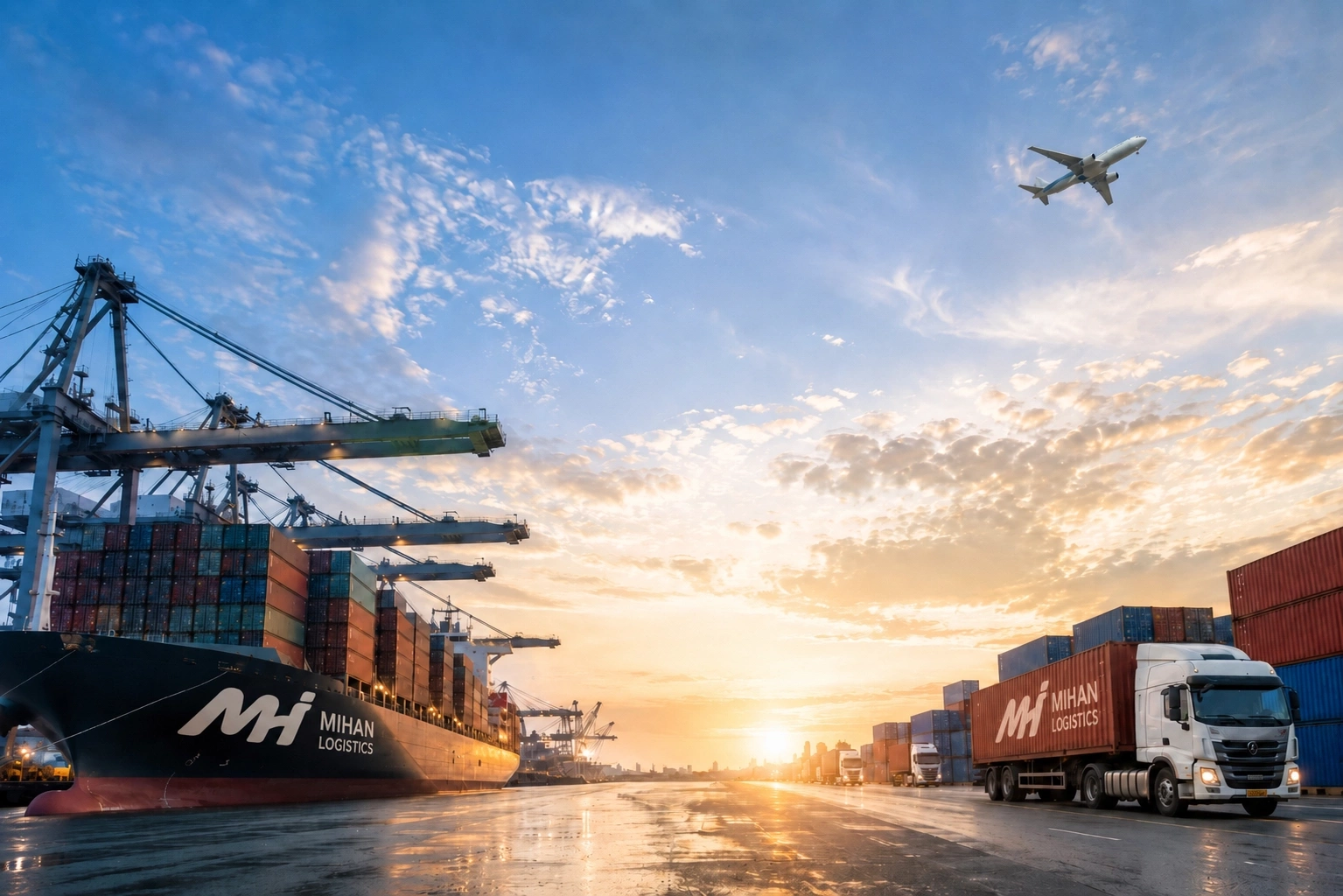
From China to the world, delivered with confidence.
MIHAN Logistics delivers with commitment.
Served Clients
Monthly Cargo Volume
Annual Cargo Volume